Rigor, Wonder, and the Weight of a Space Rock: The Story Behind Jensen Meteorites
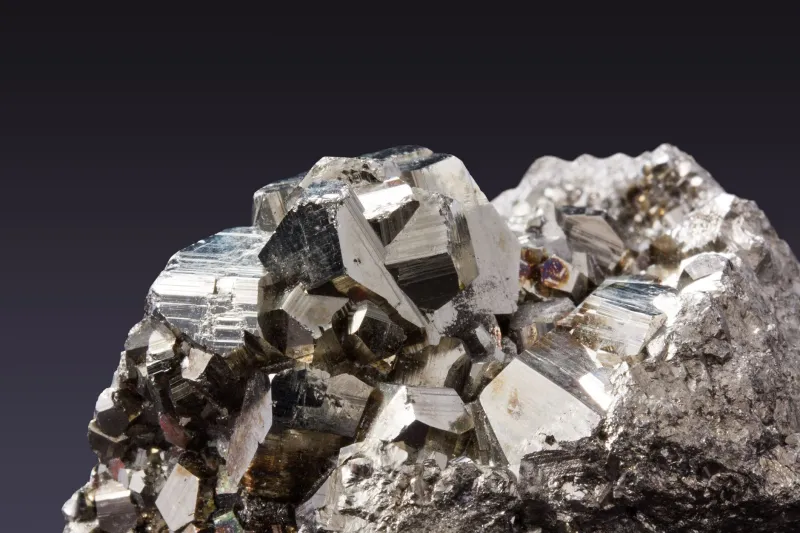
There is a particular moment that many serious meteorite collectors describe in almost identical terms: the instant they first held a verified space rock and understood, viscerally, that the object in their hand had traveled billions of miles through the void before landing on Earth. For the people behind Jensen Meteorites, that moment was not simply a personal revelation. It became the founding philosophy of an entire enterprise.
Jensen Meteorites was built on a deceptively straightforward premise — that authentic specimens, paired with honest scientific context, could do something no replica or classroom illustration ever could. They could make the cosmos tangible.
From Curiosity to Commitment
The origin of Jensen Meteorites follows a trajectory familiar to anyone who has tumbled from casual interest into deep obsession. What began as a personal pursuit of geological curiosities gradually sharpened into something more disciplined. Early encounters with the meteorite market — then, as now, a landscape populated by both reputable dealers and opportunistic sellers peddling misidentified terrestrial rocks — made one thing abundantly clear: the field desperately needed a higher standard of accountability.
The decision to formalize that standard into a business was not made lightly. Building a platform centered on authenticity means accepting that you will sometimes turn away inventory that cannot be verified to your own satisfaction. It means investing in documentation, provenance research, and ongoing education rather than simply moving product. For Jensen Meteorites, those were not reluctant compromises. They were the entire point.
The Anatomy of Authenticity
Ask any experienced collector what separates a trustworthy meteorite dealer from a questionable one, and the answer almost always returns to documentation. A meteorite without a verifiable history — ideally tied to a witnessed fall, a recognized strewn field, or a catalogued find from an established desert or Antarctic recovery program — is a meteorite that demands extraordinary scrutiny before it changes hands.
At Jensen Meteorites, every specimen offered for sale undergoes evaluation against established classification criteria. Fusion crusts, Widmanstätten patterns in iron meteorites, chondrules visible in polished slices of stony types — these are not merely selling points. They are diagnostic features that confirm a rock's extraterrestrial origin and provide collectors with the scientific language to understand what they are actually holding.
This rigor extends to the educational materials the platform provides. Rather than presenting meteorites as exotic curiosities whose value derives primarily from scarcity or spectacle, Jensen Meteorites situates each specimen within a broader scientific narrative. A pallasite is not just visually stunning; it is a window into the differentiated interiors of ancient planetesimals. A carbonaceous chondrite is not merely old; it is among the most chemically primitive material accessible to human hands, carrying organic compounds and presolar grains that predate the formation of our own solar system.
Shaping a Community Standard
The influence of platforms like Jensen Meteorites on the broader collector community is difficult to quantify but easy to observe. Longtime collectors across the United States frequently cite the educational resources available through dedicated dealers — classification guides, glossaries, provenance explanations — as the materials that elevated their engagement from passive accumulation to active scientific inquiry.
Mark Alderton, a collector based in Colorado who has been acquiring specimens for nearly two decades, put it plainly: "Before I found dealers who actually explained what I was buying, I was just picking up rocks that looked interesting. Learning to read a fusion crust, understanding what a regmaglyph tells you about atmospheric entry — that changed everything. It stopped being a hobby and started being something I could contribute to."
That shift — from passive hobbyist to engaged participant in genuine science — is precisely what Jensen Meteorites has worked to facilitate. The platform's commitment to education reflects an understanding that an informed collector is not just a better customer. An informed collector is a more careful steward of material that, in many cases, represents irreplaceable scientific data.
The Citizen Science Dimension
The relationship between private collectors and institutional science has historically been complicated, occasionally adversarial, and frequently misunderstood by both sides. Jensen Meteorites has consistently occupied a constructive position within that relationship, emphasizing that private ownership and scientific utility are not mutually exclusive.
Specimens in private hands are regularly made available to researchers for study. Collectors with well-documented finds have contributed to the expansion of the Meteoritical Bulletin, the international registry that serves as the authoritative record of classified meteorites. When private collectors understand the scientific significance of what they own, they are far more likely to preserve contextual information — GPS coordinates of finds, photographs of specimens in situ, records of associated material — that transforms a rock into a data point.
This is the ecosystem that Jensen Meteorites has worked to cultivate: one where commerce and science reinforce rather than undermine each other.
Why Authenticity Is Not Optional
The meteorite market, like any market for rare natural objects, has always attracted misrepresentation. Meteorwrongs — terrestrial rocks mistaken for meteorites — circulate with surprising persistence, sometimes in good faith, sometimes not. The consequences of acquiring a misidentified specimen extend beyond financial loss. They erode trust in the broader market and, more damagingly, they deprive collectors of the genuine experience that authentic material provides.
Jensen Meteorites treats authenticity not as a premium feature but as a baseline obligation. The site's name is, in a sense, a standing guarantee — a public commitment that the specimens offered have been evaluated with the seriousness the material deserves.
For collectors new to the field, that guarantee matters enormously. Entering the meteorite market without guidance is genuinely risky. Platforms that prioritize education alongside commerce give newcomers the tools to ask the right questions, recognize red flags, and build collections that will hold their scientific and monetary value over time.
The Ongoing Work
The story of Jensen Meteorites is, by design, an unfinished one. The meteorite market evolves. New falls occur, new strewn fields are mapped, new classifications emerge from ongoing laboratory analysis. Staying current with that science is not a passive exercise. It requires sustained engagement with the research literature, ongoing relationships with the scientific community, and a willingness to update prior assessments when new information warrants it.
That commitment to intellectual honesty — to treating the science as genuinely alive rather than as a fixed marketing backdrop — is perhaps the most accurate measure of what Jensen Meteorites has contributed to the collector community. In a field where wonder is abundant and rigor is sometimes scarce, the combination of both remains the rarest specimen of all.