Desert Floors and Open Plains: A Field Guide to Hunting Meteorites Across America
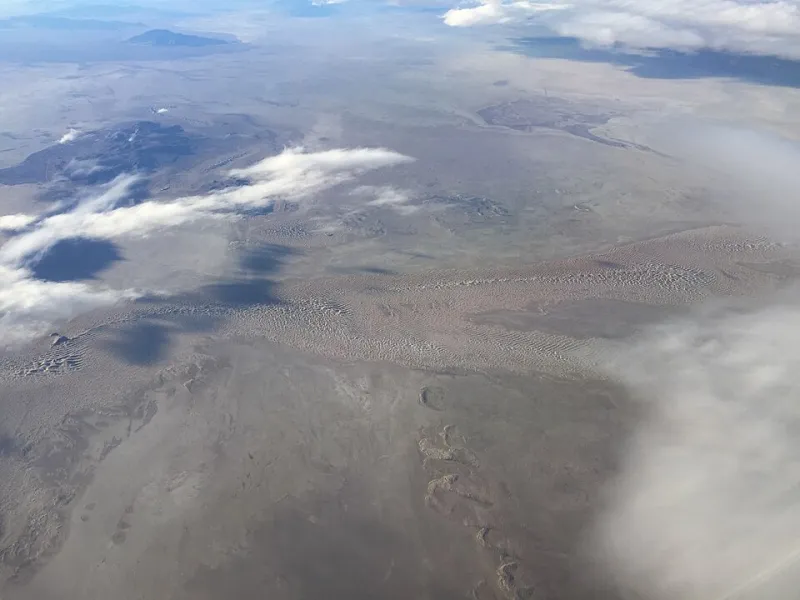
Photo: Famartin, CC BY-SA 4.0, via Wikimedia Commons
Somewhere beneath the cracked surface of a Nevada playa, or half-buried in the red clay of West Texas, a piece of the early solar system is waiting. Meteorite hunting in the United States is not a hobby reserved for credentialed scientists or wealthy collectors. With the right preparation, a clear understanding of the law, and a willingness to spend long hours under an open sky, anyone can participate in one of the most genuinely scientific forms of amateur exploration available today.
This guide is designed to give serious enthusiasts a practical foundation — covering the best recovery environments in the country, the legal landscape governing meteorite collection, the tools that separate productive hunters from frustrated ones, and a few real-world examples that illustrate just how rewarding a successful find can be.
Why Location Matters: Understanding Meteorite Stranding Zones
Meteorities fall everywhere on Earth. The challenge is not where they land — it is where they survive long enough to be found, and where the terrain makes them visually distinguishable from surrounding rock. Scientists refer to high-concentration recovery areas as stranding zones, environments where geological and climatic conditions have preserved meteorites over thousands of years and concentrated them in accessible areas.
In the United States, three broad terrain types consistently produce the best results.
Arid desert basins and dry lake beds rank among the most productive environments worldwide. The Mojave Desert in California and Nevada, the Great Basin's dry playas, and the Atacama-like flats of southern Arizona offer flat, light-colored surfaces against which dark fusion-crusted stones stand out sharply. Low rainfall means minimal chemical weathering, and the absence of dense vegetation prevents specimens from being obscured or displaced.
The Great Plains — particularly in Kansas, Nebraska, and the Texas Panhandle — have yielded a surprising number of finds, especially irons and stony-irons. The flat topography allows methodical grid-searching, and plowed agricultural fields frequently bring buried specimens to the surface. The Brenham pallasite strewn field in Kiowa County, Kansas, remains one of the most celebrated examples: discovered in the late 19th century and still producing occasional recoveries today, it has yielded olivine-studded pallasites that rank among the most visually stunning meteorites in any collection.
Alluvial fans and bajadas at the bases of desert mountain ranges also concentrate meteorites through water transport. Stones that fell on elevated terrain may have been carried downslope over millennia, pooling in natural collection points that reward careful systematic searching.
Navigating the Legal Landscape
Before a single step is taken into the field, understanding land ownership and applicable regulations is essential. The legal status of meteorite collection in the United States depends entirely on where you are standing.
Federal public lands managed by the Bureau of Land Management (BLM) present a nuanced situation. Casual collection of small quantities of common rocks and minerals is generally permitted, but meteorites occupy a legally ambiguous position. Under the Federal Land Policy and Management Act and related regulations, meteorites on BLM land are considered federal property. Collection without a permit is prohibited, and enforcement has increased in recent years. Hunters discovered removing specimens from BLM land without authorization risk confiscation and significant fines.
National Parks and Monuments enforce strict no-collection policies. Removing any natural object — meteoritic or otherwise — from these lands is a federal offense.
Private land is where the majority of productive and legally straightforward hunting occurs. Landowner permission is both a legal requirement and a matter of basic courtesy. Many ranchers and farmers in meteorite-rich regions are accustomed to requests from hunters and respond positively when approached respectfully and honestly. Offering a percentage of any find — a common arrangement — often secures access that might otherwise be declined. Get permission in writing whenever possible.
State lands vary considerably by jurisdiction. Research the specific regulations for any state land you intend to search before entering the field.
Essential Equipment for Serious Field Work
Experienced hunters will tell you that preparation separates productive outings from wasted days. The following equipment represents a practical baseline for anyone serious about systematic recovery work.
- A quality metal detector remains the single most effective tool for locating iron and stony-iron meteorites. Models with good ground-balancing capability handle mineralized desert soils far better than consumer-grade units. For stone meteorites with low metal content, detectors are less effective, making visual searching more important.
- Neodymium rare-earth magnets, either mounted on a walking stick or attached to a cord, allow rapid field testing. Most meteorites contain sufficient metallic iron to produce a clear magnetic response, immediately distinguishing them from terrestrial lookalikes.
- GPS and mapping software are indispensable for documenting find locations accurately — information that has genuine scientific value and is required if you plan to submit specimens for classification.
- Flagging tape and a field notebook support systematic grid-searching, ensuring you cover ground methodically rather than wandering.
- Protective containers and nitrile gloves minimize contamination. Handling a fresh find with bare hands introduces organic material that can complicate future geochemical analysis.
Lessons from Successful Finds
In 2009, a hunter working a remote section of Nevada's Black Rock Desert recovered a chondrite weighing just over four kilograms — a significant find by any measure. What made the recovery notable was the methodology: the hunter had spent three prior trips mapping the area, documenting surface features, and identifying a shallow playa surface that showed signs of long-term stability. The patience and systematic approach, rather than luck, drove the outcome.
In the Texas Panhandle, a farmer who had granted access to a meteorite hunter received a share of a 17-kilogram iron recovered from the edge of his property — a specimen that was subsequently classified and added to the Meteoritical Bulletin database. The relationship between collector and landowner, built on transparency and mutual benefit, produced a result neither could have achieved alone.
These examples underscore a principle that experienced hunters consistently emphasize: successful meteorite recovery is a discipline, not a lottery.
Before You Go
Research your target area thoroughly before departure. Consult the Meteoritical Bulletin database to identify known strewn fields near your intended search zone. Review satellite imagery to identify promising surface types. Contact local BLM field offices or state land agencies to clarify collection policies before assuming access.
Meteorite hunting at its best is a form of citizen science — one that has contributed genuine specimens to institutional collections and expanded our understanding of what falls from the sky. Whether you recover a fragment on your first outing or spend a dozen trips learning the landscape before making a find, the process itself connects you to something genuinely rare: the intersection of Earth and the cosmos, visible underfoot.
At Jensen Meteorites, we believe that the enthusiasm driving collectors into the field is the same force that has advanced planetary science for generations. Hunt responsibly, document carefully, and the rewards — scientific and personal — are considerable.