Priced Beyond the Stars: The Most Expensive Meteorites Ever Sold and What Made Them Worth It
In October 2012, a roughly 77-pound iron meteorite shaped like a natural throne sold at Christie's New York for $83,000. A few years later, a fragment of Martian rock smaller than a deck of cards fetched nearly ten times that figure from a private collector. The meteorite market, once a niche corner of the natural history world, has evolved into a sophisticated arena where provenance, rarity, and planetary origin converge to produce prices that astonish even seasoned collectors.
Understanding what separates a $50 chondrite from a $500,000 pallasites requires looking at the same factors that drive value in any rare collectibles market—and then adding a layer of cosmic context that no other category of collectible can match.
The Pallasites: Nature's Stained Glass Windows
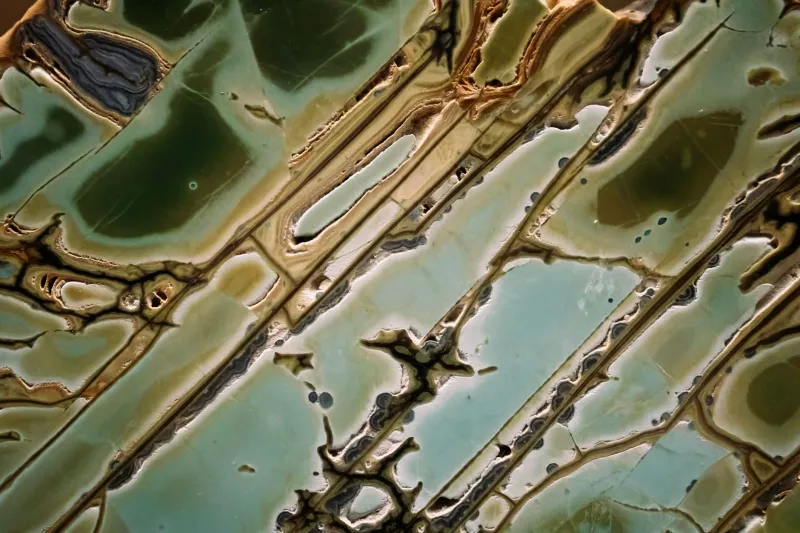
No meteorite type commands more consistent admiration from both scientists and collectors than the pallasite. These extraordinary specimens consist of centimeter-scale olivine crystals suspended within a matrix of iron-nickel metal—a structure believed to originate at the core-mantle boundary of differentiated asteroids. When sliced thin and backlit, olivine crystals glow amber, gold, and green in a pattern that genuinely resembles stained glass.
The Fukang pallasite, discovered in China's Xinjiang region in 2000, is widely regarded as one of the most visually spectacular meteorites ever found. The main mass weighed approximately 1,003 kilograms, and sliced sections have sold individually for prices ranging from several thousand to over $40,000 per kilogram. In 2008, a 31-kilogram slice was offered at Bonhams with an estimate of $2 million, though the final sale outcome was not publicly disclosed. Individual Fukang slices continue to appear at major auction houses and command premium prices.
The Esquel pallasite, recovered in Argentina in 1951, has similarly achieved near-legendary status. Polished slices regularly sell for $30 to $50 per gram at retail, meaning a single kilogram-scale slice can easily exceed $30,000. The exceptional clarity and density of Esquel's olivine crystals, combined with limited total known mass, keep demand consistently ahead of supply.
Martian Meteorites: A Price Premium from the Red Planet
Fewer than 300 meteorites have been confirmed as originating from Mars, identified through isotopic signatures that match data collected by NASA landers. That extraordinary scarcity—combined with the cultural fascination surrounding Mars exploration—makes authenticated Martian specimens among the most coveted objects in the collector market.
The Tissint meteorite fell in Morocco in July 2011, witnessed by local residents who heard the sonic boom and saw the fireball. Because it was recovered quickly, Tissint arrived on the market in relatively fresh condition with minimal terrestrial contamination—a critical factor for scientific value. Christie's sold a 100-gram Tissint fragment in 2012 for approximately $83,000, or roughly $830 per gram. Retail prices for Tissint specimens have since ranged from $500 to over $1,000 per gram depending on quality and documentation.
For context, gold currently trades at approximately $60 per gram. Authenticated Martian meteorite material routinely sells for ten to twenty times that figure.
The NWA 7034 meteorite, nicknamed "Black Beauty," represents perhaps the most scientifically significant Martian specimen in recent decades. Purchased by researcher Carl Agee at the University of New Mexico, it was found to contain ten times more water than any other known Martian meteorite and provided new evidence about ancient Martian surface conditions. Though Black Beauty itself was acquired for scientific study rather than public auction, comparable Martian specimens have sold privately for six-figure sums.
Lunar Meteorites: Pieces of the Moon You Can Own
Apollo missions returned 842 pounds of lunar material to Earth, all of which remains under strict government control and is unavailable for private ownership. However, natural meteorite impacts on the Moon periodically eject surface material into space, and some of that material eventually lands on Earth as lunar meteorites. These specimens are entirely legal to own and represent the only way a private collector can hold authenticated Moon rock.
Lunar meteorites typically sell for $500 to $2,500 per gram at retail, though exceptional specimens with strong provenance and high scientific classification can exceed $5,000 per gram. A notable 13.5-gram lunar meteorite sold at Christie's in 2018 for $612,500—approximately $45,000 per gram—driven by the combination of exceptional documentation, aesthetic presentation, and the sheer romance of lunar provenance.
The Willamette Meteorite: America's Most Famous Space Rock
No conversation about meteorite value in an American context is complete without acknowledging the Willamette meteorite, the largest meteorite ever found in the United States. Discovered in Oregon in 1902 and weighing approximately 15.5 tons, Willamette is an iron meteorite distinguished by dramatic bowl-shaped cavities formed by terrestrial weathering. It currently resides at the American Museum of Natural History in New York, where it has been on public display for over a century.
Willamette was never sold at public auction, but its cultural and scientific valuation has been estimated by insurance and appraisal experts at figures exceeding $20 million. Its story—involving a complicated legal dispute between the Oregon Iron and Steel Company and the landowner who discovered it—also illustrates how meteorite ownership rights have historically been contested in the United States.
What the Market Actually Measures
Beyond specific specimens, the meteorite market operates on a set of value drivers that any collector should internalize:
Rarity by type. Iron meteorites, chondrites, and achondrites each have different supply dynamics. Martian and lunar specimens are rare by definition. Pallasites are rare by geology. Witnessed falls—meteorites whose descent was observed and documented—command a premium over finds regardless of type.
Condition and freshness. Terrestrial weathering degrades meteorites chemically and structurally. A fresh fall recovered within days commands significantly more than an equivalent specimen that sat in a desert for centuries.
Aesthetic qualities. The collector market places real value on visual impact. A pallasite slice that photographs beautifully will outsell a scientifically equivalent but visually unremarkable specimen at auction.
Provenance and documentation. Official classification in the Meteoritical Bulletin, chain of custody records, and association with notable falls or researchers all add measurable value. As with fine art, documented history matters.
Size and completeness. Complete individuals—meteorites that landed as single intact masses—typically outperform fragments of equivalent weight. Main mass specimens, representing the largest recovered piece of a given fall, carry additional prestige.
The Collector's Takeaway
The meteorite market rewards knowledge. Collectors who understand the scientific basis for valuation—who can distinguish a Type I chondrite from a Martian shergottite, and who know why a witnessed fall commands a premium over a Saharan find—are positioned to make acquisitions that hold and appreciate in value over time.
At Jensen Meteorites, we source specimens with full attention to these value factors. Whether you are beginning your collection with an accessible chondrite or pursuing a high-value pallasite slice for a centerpiece acquisition, the same principle applies: authentic provenance, rigorous classification, and genuine cosmic origin are the foundations of every specimen worth owning.