When the Ground Gives Up Its Secrets: How Ordinary Americans Are Becoming Planetary Scientists One Find at a Time
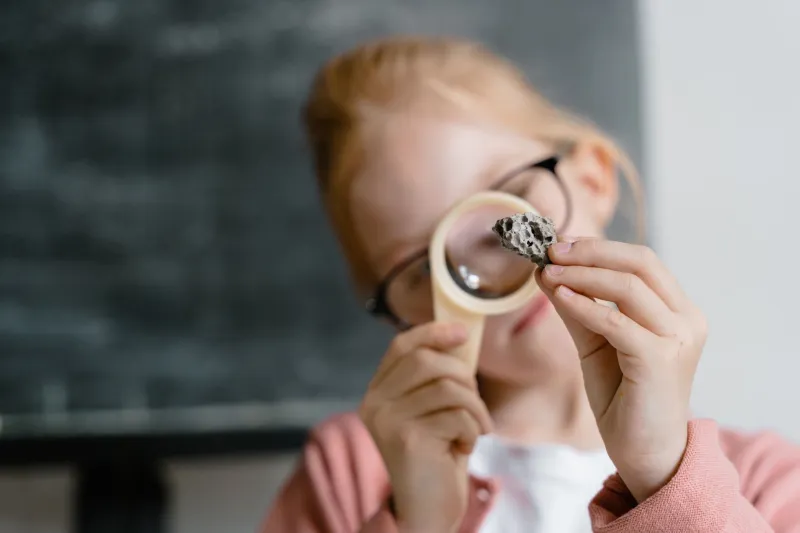
There is a particular kind of silence that follows the moment a person realizes what they are holding. A weight that feels slightly wrong for its size. A surface that catches the light differently than surrounding stones. A subtle magnetic pull toward the compass needle resting in a shirt pocket. For a remarkable number of Americans across the country — farmers, teachers, retirees, weekend hikers — that silence has marked the beginning of something neither expected nor planned: a serious engagement with planetary science.
The story of the amateur meteorite finder turned citizen scientist is not a single narrative. It is dozens of them, each beginning with a different landscape and a different kind of person, but converging on a shared realization: the universe has left physical evidence on this planet, and finding it matters.
The Find That Changes Everything
Amateur collectors frequently describe their first confirmed meteorite discovery in terms that suggest the experience exceeds the object itself. The rock becomes a threshold. Before it, the cosmos was abstract — something observed through a telescope or discussed in a documentary. After it, the solar system becomes tactile, personal, and scientifically immediate.
Consider the arc of a typical transition. An individual with no formal background in geology or planetary science encounters a suspicious stone during a walk across dry, open terrain — the kind of environment where meteorites concentrate visibly over time. They photograph it, submit it to an online identification forum, and receive enough encouragement to pursue formal testing. A university lab confirms the classification. Suddenly, that person's name is attached to a specimen that may eventually enter a scientific database, a museum collection, or a research paper.
The psychological shift that follows such a confirmation is well-documented within collecting communities. Curiosity becomes structured. Casual reading becomes systematic study. The collector begins to understand terms like chondrite, fusion crust, Widmanstätten pattern, and fall-versus-find distinction — not as vocabulary acquired for social credibility, but as tools genuinely needed to interpret what they are observing.
What Citizen Finders Actually Contribute
It would be easy to romanticize the amateur's role while quietly diminishing its scientific value. That would be a mistake. Private collectors and independent hunters have made contributions to planetary science that are both measurable and significant.
The Meteoritical Society's publicly maintained database — the Meteoritical Bulletin — contains thousands of entries submitted by or with the direct assistance of private individuals. Many of these specimens were recovered from locations that professional field teams had not prioritized, or in conditions that made organized expeditions impractical. The American Southwest, in particular, has yielded classified specimens discovered by individuals who were not geologists by training but who had developed sharp observational skills through years of systematic searching.
Beyond raw discovery, citizen collectors contribute in subtler ways. They maintain provenance records, photograph find sites with GPS coordinates, preserve fusion crusts from contamination, and sometimes fund preliminary classification analyses out of pocket — work that would otherwise fall to institutions operating under constrained research budgets. When a collector donates a portion of their find to a university for study, they are participating directly in the scientific process, not merely adjacent to it.
The Learning Curve Is Steeper Than It Looks — and Worth Every Step
Becoming a competent meteorite identifier and responsible collector is not a casual undertaking. The field rewards patience, methodical thinking, and a genuine tolerance for uncertainty. Many promising stones turn out to be terrestrial — slag, magnetite-rich basalt, iron concretions — and learning to distinguish these convincingly requires repeated exposure to both authentic specimens and their earthly mimics.
Several collectors describe the learning process as unexpectedly humbling. Early confidence gives way to a more nuanced appreciation for how sophisticated proper identification actually is. That humility, experienced collectors note, is itself a form of scientific maturation. Understanding what you do not yet know is among the more valuable skills in any empirical discipline.
Resources available to American collectors today are substantially richer than they were even fifteen years ago. University extension programs, online classification communities, dedicated collector forums, and direct access to published classification literature have flattened the learning curve considerably. What once required proximity to a major research institution can now be approached, at least initially, from a rural home with a reliable internet connection.
The Relationship Between Collecting and Contributing
One of the more productive tensions within the meteorite community involves the question of what a serious collector owes to science. There is no universal answer, and the debate is ongoing. Some collectors believe that proper curation, accurate documentation, and willingness to share specimens with researchers constitutes a full and sufficient contribution. Others argue for more formal partnerships with institutions, including donation programs and co-authorship arrangements on classification papers.
What is clear is that the boundary between private passion and public science has become genuinely permeable. Collectors who invest in their own education, maintain rigorous records, and engage honestly with classification processes are functioning, in a meaningful sense, as field scientists — regardless of the credentials they do or do not hold.
This is not a romantic exaggeration. It is a structural reality of how planetary science currently operates in the United States. Professional researchers do not have the personnel or resources to survey every promising strewn field, document every promising stone, or maintain every specimen that warrants preservation. Private collectors fill that gap, and the scientific community has, largely, come to recognize and appreciate that fact.
What the Transition Looks Like in Practice
For those who find themselves at the beginning of this journey — holding something unusual, uncertain what to do next — the path forward is more accessible than it may appear. Reputable dealers and established collectors are generally willing to assist with preliminary assessments. Classification labs at several American universities accept submissions from private individuals. The Meteoritical Society provides guidance on the formal classification process for those who have made potentially significant finds.
Perhaps more importantly, the meteorite community in the United States, while competitive in some respects, tends to reward genuine curiosity and honest engagement. Newcomers who approach the field with intellectual seriousness — who are willing to learn, to accept correction, and to contribute what they can — typically find themselves welcomed into a community that is, at its best, united by a shared sense of wonder at what these objects represent.
A confirmed meteorite is not merely a collectible. It is a fragment of the early solar system, preserved across billions of years and delivered, improbably, to a specific patch of American ground. The person who finds it, who treats it with appropriate care, and who contributes what they know to the broader scientific record, has done something genuinely meaningful.
The cosmos, it turns out, does not require a laboratory to begin its education.